What Does OSHA 1926.51(c) Actually Require?
The construction standard is a ratio, not a guess. Per OSHA 1926.51(c)(1), a crew of 20 or fewer needs 1 toilet facility. From 20 workers up to 199, you add 1 toilet seat and 1 urinal for every 40 people. At 200 or more, that ratio drops to one seat and one urinal per 50. This is the number contractors in Federal Way should hand to their sanitation vendor before delivery, not after inspectors show up. General industry sites, warehouses and offices, follow a different table under 1910.141(c)(1)(i), so do not mix the two if your operation spans both. Water matters too: 1926.51(a)(1) requires an adequate supply of potable water at every jobsite, separate from toilet counts entirely. If you are still scoping numbers, how many porta potties do I need walks through worker count, shift length and duration together. For a straightforward crew of 15 to 30, a standard porta potty rental usually covers it.
Is Cal OSHA Different From Federal OSHA for Portable Toilets?
Washington operates its own state plan, and Federal Way sits under it, so contractors bidding jobs that also touch California crews should not assume the ratios match exactly. Cal osha portable toilet requirements follow a similar structure to 1926.51(c) for construction, but cal osha portable toilet requirements construction crews face can layer on stricter enforcement or documentation expectations depending on the jurisdiction. If your company works both states, treat each site's requirement as local until confirmed, and do not default to memory. Federal Way Porta Pros services jobsites across this city and nearby, including Milton about 6.6 miles south and Des Moines roughly 7.0 miles north, and ratios do not change by zip code under the federal standard itself. What does change is placement approval. Some cities require confirming right-of-way placement with the local permitting office before a unit lands on a street-facing lot; that is not verified for Federal Way specifically, so check with the city before delivery day. The porta potty permit requirements page covers what to ask before you schedule.

How Far Can Portable Toilets Be From the Work Area?
There is no single published figure for osha portable toilet distance requirements on construction sites the way there is for agriculture. Field sanitation under 1928.110 sets a quarter mile walking distance for hand-labor employees, which is a useful benchmark even outside farm work, but 1926.51(c) itself is silent on exact footage for general construction. The practical rule contractors use: keep units close enough that workers actually walk to them instead of skipping the break. Delivery access matters just as much as distance. A roll-off delivery needs about 60 feet of straight clearance behind the truck, and portable toilet trucks need similar unobstructed access, so tight urban lots in Federal Way should flag any gates, slopes or parked equipment before the truck shows up. If your site handles paint, coatings, herbicides or insecticides, 1926.51(f)(1) kicks in separately from toilet counts, requiring washing facilities for those specific contaminant exposures. A basic handwashing station rental satisfies that need without overcomplicating the setup, and 29 CFR 1910.141(d)(2) requires soap and towels or a drying device at any washing station, not hand sanitizer alone.
Do I Need an ADA-Compliant Unit on My Jobsite?
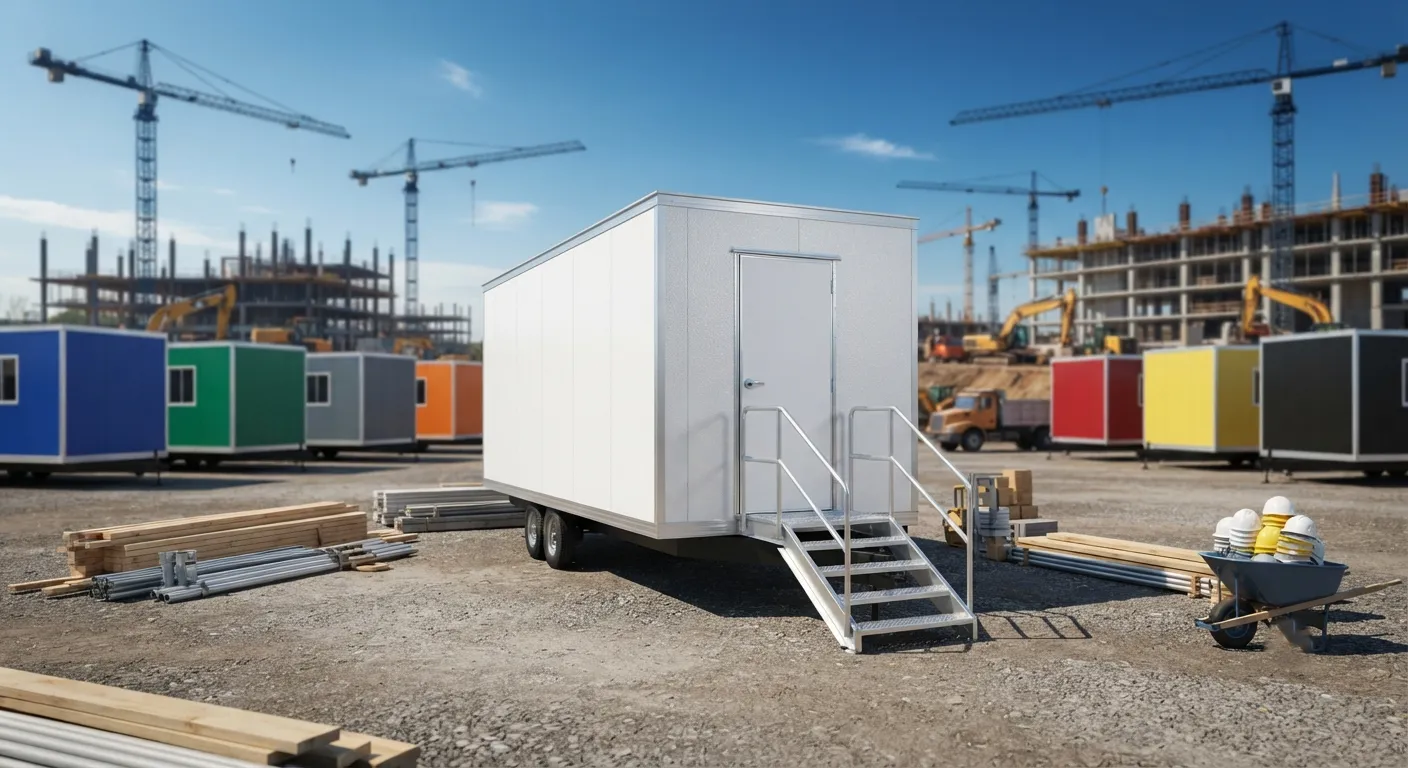
If you are clustering portable toilets, ADA Standards 213.2 requires at least 5 percent of units be accessible, with a minimum of one no matter how small the cluster. That means even a two-unit jobsite in Federal Way needs one accessible toilet if the public or disabled workers may use them. An ADA accessible porta potty meets the clear width requirements under ADA 403.5.1 for the approach route and 404.2.3 for the door opening, plus the 60 inch turning circle under ADA 304.3.1 inside the unit. Reach ranges and operable parts matter too: ADA 308.2.1 sets the forward reach zone, and 309.4 requires controls usable with one hand without tight grasping. Event sites and public-facing jobs should not treat this as optional. If you are running a mixed fleet, a deluxe flushable porta potty alongside standard units is common on longer jobs, and pricing runs like this:
| unit | day | week | month |
|---|---|---|---|
| standard | $100-$350 | $130-$500 | $125-$325 |
| ada | $200-$400 | $200-$240 | - |
| deluxe | $85-$1200 | $150-$290 | - |
For projects needing debris removal alongside sanitation, pair your toilet order with a roll-off dumpster rental or check dumpster permit requirements if the container sits in a public lane. Longer builds sometimes need a storage container rental too, and Federal Way crews should keep the same permit-check habit for containers as for toilets since the underlying right-of-way question is often the same, a lesson that applies whether you search it here or as storage container rental oshawa or portable toilet rental oshawa while comparing vendors. If you need a full breakdown by job type, construction site services covers toilets, fencing and dumpsters together, and OSHA portable toilet requirements itself is the hub page other city guides point back to.
How many porta potties do I need for a 20 person crew?
One toilet covers a crew of 20 or fewer under OSHA 1926.51(c)(1). Once you add a 21st worker, the ratio shifts to one toilet and one urinal per 40 people. Federal Way Porta Pros can help size the count against your actual shift schedule and duration before delivery. See how many porta potties do I need for the full breakdown.
Does OSHA require handwashing stations on every jobsite?
Not automatically. 1926.51(f)(1) only applies where workers handle paints, coatings, herbicides or insecticides, or face similar contaminant exposure. Ordinary construction toilets fall under 1926.51(c) sanitation rules instead. A hand sanitizer station rental does not satisfy 1910.141(d)(2), which requires actual soap and towels or a drying device.
Can I place a porta potty in the street right-of-way in Federal Way?
That needs confirming directly with the city before delivery. Placement rules in public right-of-way vary and were not verified for this specific case, so do not assume approval. Federal Way Porta Pros can hold delivery until you confirm, and the porta potty placement guide covers general siting questions.
What is the difference between construction and general industry toilet rules?
Construction sites follow OSHA 1926.51(c)(1), a straight worker-count ratio. General industry workplaces, offices and warehouses, follow 1910.141(c)(1)(i) instead, which uses a different table. Mixed-use sites in Federal Way should apply whichever standard matches the work actually happening on that portion of the site.
How often does OSHA require porta potty servicing?
OSHA itself does not set a fixed cleaning interval, but the industry baseline under ANSI/PSAI Z4.3 is one service visit weekly for up to 10 users over a 40 hour week. Heavier crews need more frequent pumping. See how often are porta potties cleaned for scheduling by crew size.
Next step
Get a delivery date
Tell us the address, the dates and the headcount. We size the order and confirm the route.