How fast can you get portable toilets to a disaster site?
Speed depends on what's already staged and how far the site sits from our yard. Federal Way sits close enough to Milton, 6.6 miles south, and Des Moines, 7.0 miles north, that we can pull units from either direction if one route is blocked. During a widescale event, roads flood, trees come down, and normal delivery windows go out the window. That's why we keep standard porta potty rental units pre-staged rather than built to order every time.
A single day rate for a standard unit falls between $100 and $350 depending on order size and access, and the delivery fee itself runs $100 to $500 for a one-time day drop, per our measured pricing data across dozens of jobs. If your site has no clear access or the truck can't get within reach, tell us before we load the truck. We need it to work the first try, not the third.
For agencies coordinating shelters or command posts, an emergency porta potty rental order gets priority routing over standard bookings. If you're not sure how many units your headcount needs, run the numbers through how many porta potties do i need before you call, it speeds up the quote.
What do you provide beyond toilets during a disaster response?
Toilets solve one problem. Water, waste, and space solve the rest. We bring handwashing station rental units alongside every restroom order because OSHA 1926.51(a)(1) requires an adequate supply of potable water at any place of employment, and a disaster site is still a place of employment for the crews working it. Soap and towels matter too. Under 29 CFR 1910.141(d)(2), washing facilities need actual soap and a towel or hand dryer, hand sanitizer alone does not satisfy that rule, so we stock stations accordingly.
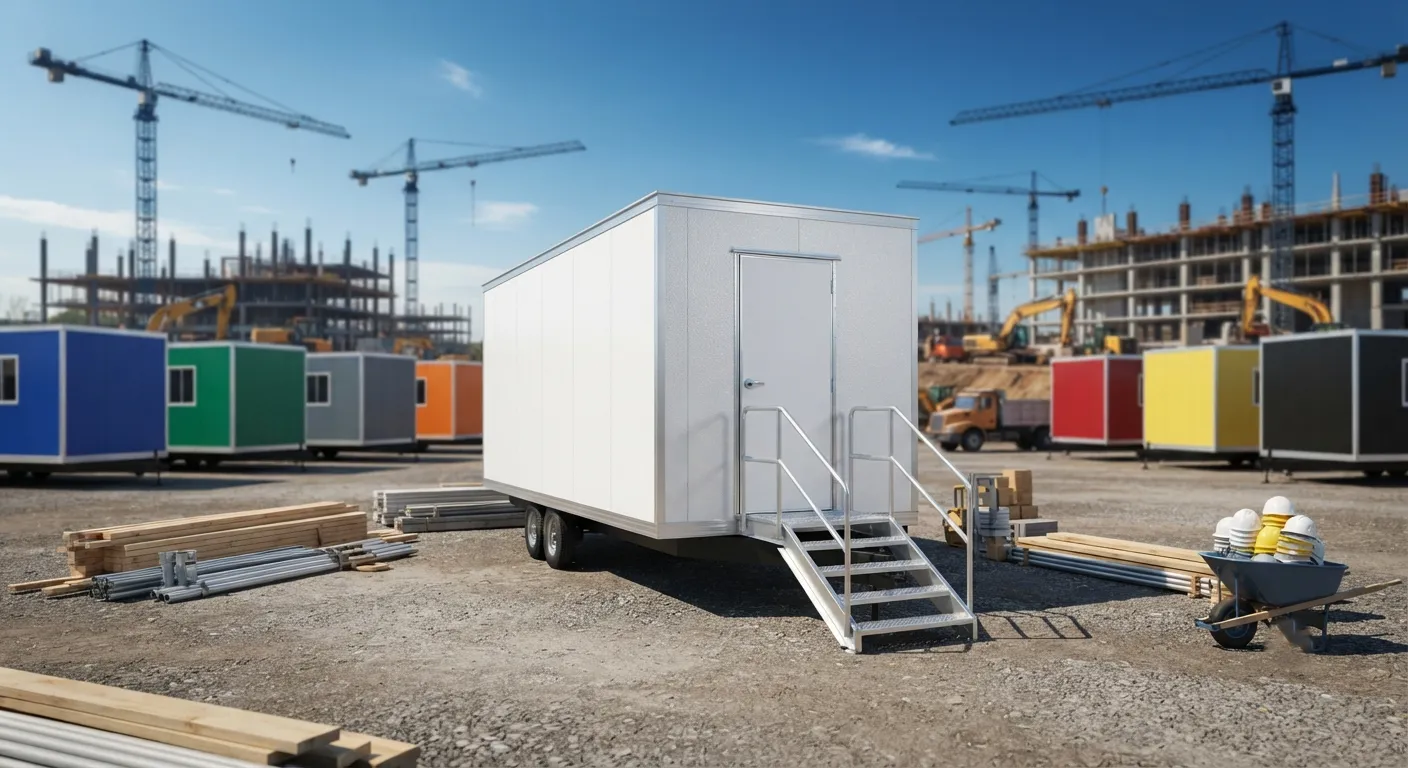
If the response involves a longer stay, a restroom trailer rental gives responders a real door and a flush toilet instead of a standard unit, and a shower trailer rental keeps crews functional over multiple days in the field. Need somewhere to lock up gear or supplies? A storage container rental or a mobile office trailer rental can serve as a command point right next to the restrooms.
Debris removal runs parallel to sanitation in most disaster scenes. A roll-off dumpster rental clears storm debris fast, and OSHA 1926.25 requires scrap and debris to be cleared from work areas as a basic housekeeping rule, which applies just as much to a disaster staging site as a construction job. If flooding backs up a septic system, septic pumping service needs to happen before anyone can use a bathroom on that property again, and emergency septic service covers exactly that call.
Do disaster response sites need ADA-accessible units?
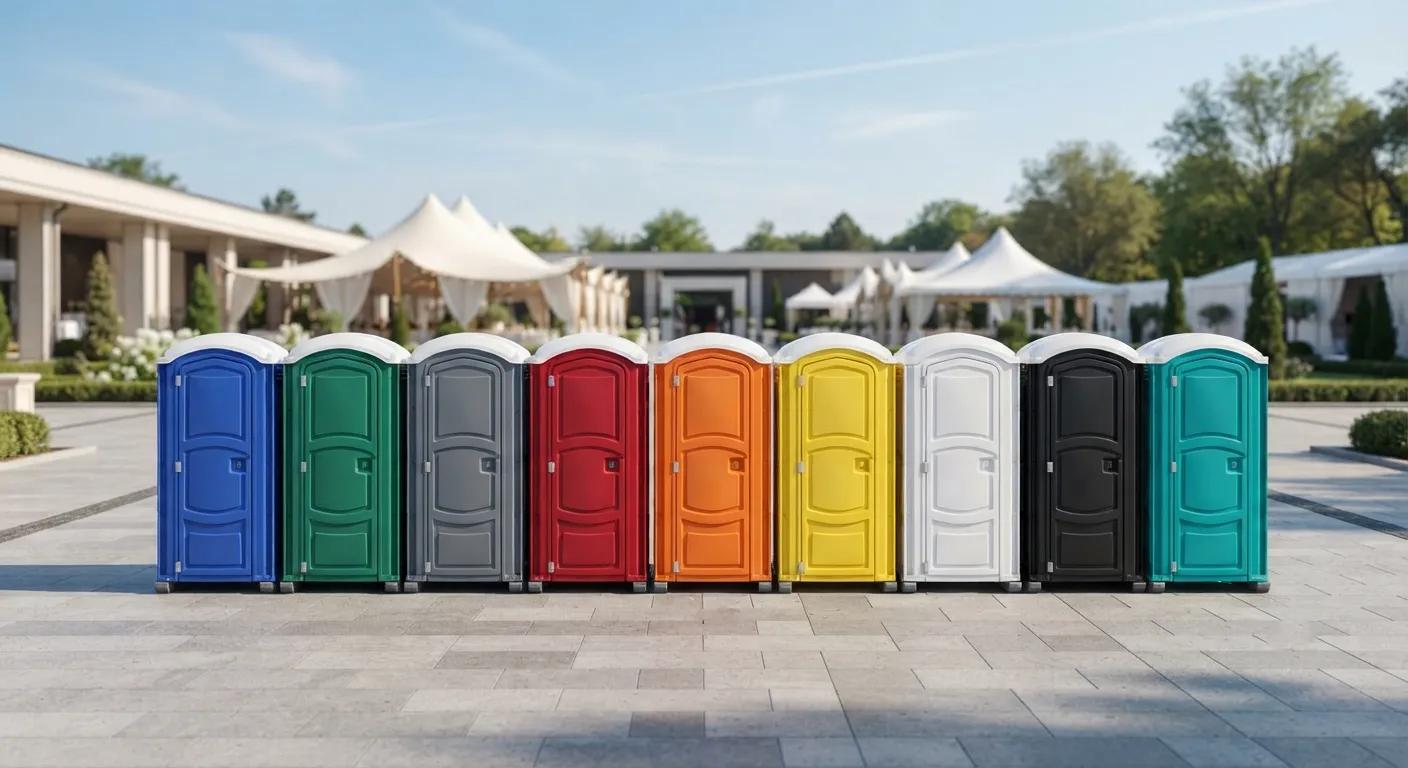
Yes, and this gets missed under time pressure. ADA Standards section 213.2 requires that where single-user portable toilet units are clustered, at least 5 percent of them, and never fewer than one, must be accessible. A shelter site with a dozen standard units still needs at least one accessible unit meeting that standard. Our ada accessible porta potty units run $200 to $400 a day and include a 60 inch turning circle per ADA Standards section 304.3.1, wide enough for a wheelchair to maneuver inside.
Door width matters too. ADA Standards section 404.2.3 sets a 32 inch minimum clear door opening, and our accessible units meet that spec along with the 36 inch clear route width required under section 403.5.1. If you're staging a shelter, review ada restroom requirements early so the accessible count is right from delivery day one, not added as an afterthought once someone flags it.
Placement matters as much as unit count. Ground has to be stable and slip resistant per ADA Standards section 302.1, which ruins a lot of otherwise convenient spots after a flood. Check porta potty placement guide before you pick a location, and confirm any right-of-way placement with the city directly since Federal Way permit specifics for street or sidewalk placement are not something we'll guess at here.
What's the fastest way to request emergency units in Federal Way?
Call or submit request a quote with your headcount and site address. We prioritize confirmed emergency orders over standard bookings and route from whichever yard sits closest, including coverage stretching toward Fife, 8.2 miles south, and Puyallup, 11.1 miles south.
How many units does a shelter site actually need?
It depends on population and duration, not guesswork. Use how many porta potties do i need as a starting point, then adjust once headcount firms up. Larger shelters often mix standard units with at least one ADA-compliant unit per the 5 percent rule.
Can you deliver if roads are partially blocked?
Often yes, since we route from multiple directions. Tell us about access limits, low branches, or flooded streets before delivery day so we bring the right truck and don't waste the first attempt.
Do you provide handwashing stations separately from toilets?
Yes. handwashing station rental units can be ordered on their own or paired with restrooms, and each includes soap and towels to meet 29 CFR 1910.141(d)(2).
What if our septic system failed during the disaster?
That needs pumping before normal use resumes. septic pumping service and emergency septic service both handle failed systems, and a typical 1,000 gallon residential tank gets pumped every 3 to 5 years under normal conditions.
Next step
Get a delivery date
Tell us the address, the dates and the headcount. We size the order and confirm the route.